My design and color choices for the illustration of the Green Book show how black travelers had to watch their backs when traveling through the Jim Crow South. The time was very political unstable and lacked social cohesion amongst the general populace. Politically speaking, the country was still dominated by the history of the Civil war. The South voted almost exclusively Democratic for about a century and the North voted heavily Republican. White southerners still reeling from the war of northern aggression wanted nothing to do with the black population, and thought segregation was the best option.
My user interface immerses the user within the website. It is not overwhelming, but it does highlight the important parts that need to stand out and is overall aesthetically pleasing. I struggled with the customization aspect of the website, and picking out what colors and fonts I was using. I am pretty sure I didn’t do some of the customization aspects of the assignment properly, but I learned a lot in the process. In the future, I would play around with the more advanced settings and customization options. There are a lot of features that can add nice nuance to make the website stand out and look visually pleasing.
This assignment was a fun activity that allowed me to play around with HTML and CSS and helped me build up some confidence. It made me feel like I was learning something, instead of copying and not retaining any information. I will use the website to not only expand on the current subject matter, but in the future, I will use it for personal hobbies that can use a website. This is also great tool for marketing yourself for a professional career opportunity. For instance, if I was an artist, I could put samples of my work on the website and reference it to interested parties. For me, figuring out how to implement the hover settings for the navigation menu and hyperlinks was the hardest part. I was invariably able to figure it out and add a satisfying setting to user interface. If I was to make any changes in the fture, this is one of the changes that I would mess around with because there are so many different settings and customization options.
Do you ever think about what happens to websites or internet services that disappear? Researchers predict that of all the webpages that existed between 2013 and 2023, roughly 25% of them have vanished. The websites that have vanished might not ever be restored, but a non-profit organization called Internet Archive has committed itself to recovering lost data and storing digital data from the world wide web. Internet Archive’s Wayback Machine can recall millions of websites, movies, tv shows, music and songs, etc. Even content that isn’t accessible on the internet today, like the 1977 comedy series Fernwood 2 Night. This organization, comprised mostly of volunteers, is working tirelessly to act as a backdrop for the world’s data storage problem.
Internet Archive was founded back in 1996 in San Fransico by an internet pioneer named Brewster Kahl. They have challenged themselves with the most ambitious archiving project in history, gathering 866 billion webpages, 44 million books, 10.6 million movies and tv shows, and much more. A few other small volunteer groups are helping them on this ambitious journey to keep the world from digital oblivion, all while storing the data in only a few data centers worldwide.
Unfortunately, Internet Archive has had legal pushbacks involving copyright infringement and intellectual property. Recently, they were sued by four major book publishers for copyright infringement. They argued that Internet Archives’ practice of scanning physical books and lending out digital copies breaks US copyright law. They lost the case and appeal against the decision. At the present moment, Internet Archive is facing a 400-million-euro lawsuit that jeopardizes the non-profit’s survival.
Without hard working volunteers to help humanity store its history, it would be lost forever. Thousands of years and billions of pages of information gone by the waste side. This article reflects not only digital storage, but storage as well. Not everything can be stored digitally and not everything can be stored physically. This was a fascinating article because I not only use the Wayback Machine, but I have donated to the Internet Archive personally. Digital history will act as the fundamental backbone for the future of history and academia. Article: https://www.bbc.com/future/article/20240912-the-archivists-battling-to-save-the-internet
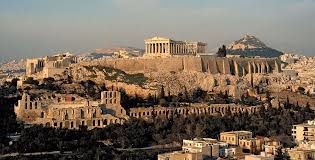
The article I chose for this blog is called “Strange Frontiers 09 | The digital tool helping Athenians celebrate and discover the history beneath their feet.” This story describes how the ancient city of Athens, Greece is built upon layer after layer of ruins, and because of this, the locals of Athens are unable to experience the rich history that encompasses the city. Athens, the capitol of Greece, was first established around 3000 BC. It has undergone numerous transformations throughout the years and is rife with character and history. This article portrays how researchers use digital tools online to help share Athen’s history to its native residents, as well as tourists. Traditionally, historical texts are transcribed in a written physical form and then disseminated to the masses, whereas in this situation, qualified professionals are using their skills to ease the trouble of accessing information.
Additionally, digital tools have transformed the way historians interpret and visualize data. Programs like Geographic Information Systems (GIS) allow researchers to map historical events and trends, providing new insights into the spatial dynamics of history. For instance, GIS can be used to track the migration of peoples, the spread of diseases, or the development of empires over time. By overlaying historical data on modern maps, historians can uncover patterns that might have been overlooked using traditional methods.
Another powerful tool is digital archives and virtual museums, which offer immersive experiences that bring history to life. Virtual Reality (VR) and Augmented Reality (AR) are being used in some museums and historical sites to create interactive exhibits, where users can virtually walk through ancient ruins or interact with historical artifacts. These technologies offer an emotional and educational connection to history, making it more accessible to people who may not have the chance to visit these places in person.
Archaeologist Annita Theocharaki was invited onto a podcast to describe the system and how it works. They utilize an app that is neatly organized and guides the user through the city, touching up on various talking points. This method of portraying information has motivated thousands of people to learn about their history and encourages tourists to come and indulge in Greek culture as well.